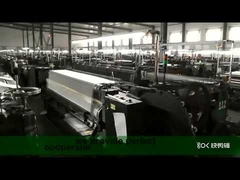
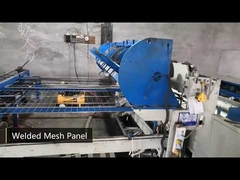
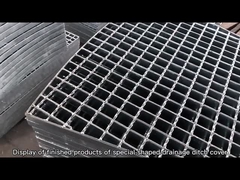
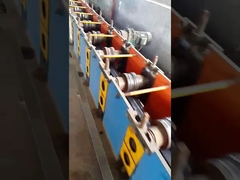
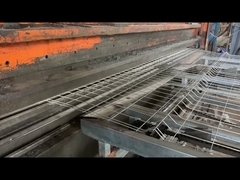
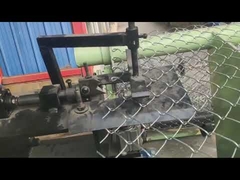
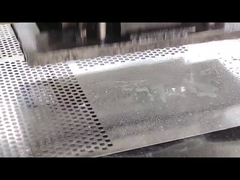
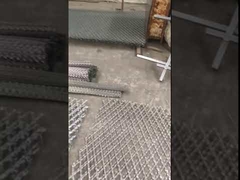
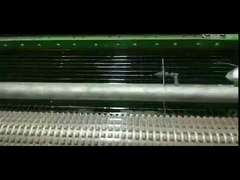
Brief: Need quick answers about practical use? This video highlights the essentials of Offshore Pipeline Counterweight Welded Mesh. You'll see how this specialized welded mesh reinforces, protects, and adds weight to offshore oil and gas pipelines, ensuring durability in harsh subsea environments.
Related Product Features:
Offers high tensile strength to withstand pipeline construction stress and pressure.
Provides excellent anti-corrosion and anti-rust properties with galvanized coating.
Enhances structural integrity to prevent cracks, leaks, and other pipeline issues.
Delivers cost-effectiveness through long service life and reduced maintenance needs.
Designed for durability in harsh environmental conditions like extreme temperatures.
Features a neat, regular appearance with firm mesh and secure solder joints.
Available in four types: CT-N, CT-T, CT-L, and CT-W for various applications.
Easy to install and coat with concrete for efficient pipeline strengthening.
FAQs:
What is the primary function of Offshore Pipeline Counterweight Welded Mesh?
It serves to reinforce, add counterweight, and protect offshore oil and gas pipelines by strengthening the concrete coating layer, ensuring stability and durability during and after installation.
What materials and surface treatments are used for this welded mesh?
It is made from Q235 low carbon steel wire with a hot-dipped galvanized coating, providing up to 300 g/m² of zinc for superior corrosion and rust resistance.
In which pipeline applications is this reinforced mesh commonly used?
It is widely applied in subsea oil and gas pipelines, everglades gas pipelines, river bottom pipelines, water and wastewater systems, chemical processing pipelines, and mining and ore processing pipelines.
How does the mesh design facilitate concrete coating and installation?
The line wires are deeply crimped and welded into a wave structure, making it easy to coat with concrete and submerge in water or earth, ensuring a secure and efficient installation process.